Xinhua Headlines: Melody saved: How a Uygur performing art survived the silence

* Before the Twelve Muqam was ever taught in schools or honored by UNESCO, its survival depended entirely on the memory of a Uygur musician in his 70s named Turdi Ahun, and on the fragile wire recorder of a young Han Chinese musician, Wan Tongshu.
* When the aged musician heard his own voice -- the voice that held the entire Twelve Muqam -- played back from Wan's recorder, he wept. For the first time, he knew the music he carried might live beyond him.
* Today, the Twelve Muqam no longer rests on one man's memory or on delicate wire reels. It lives on in notation, digital archives, classrooms, and new performances -- an ancient art, still evolving, and still heard.
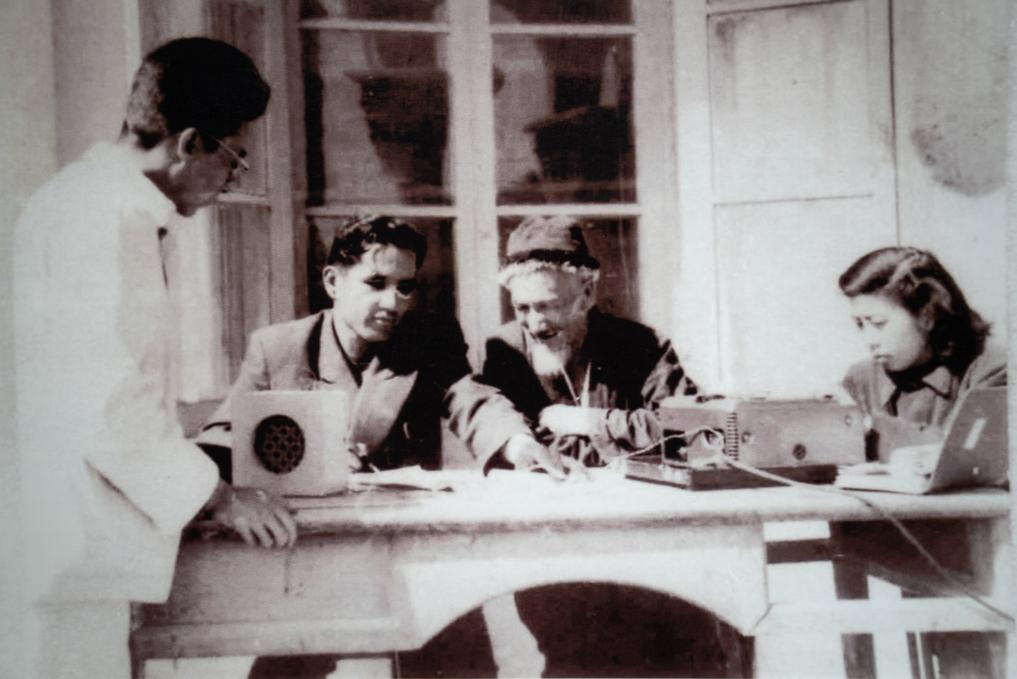
URUMQI, May 7 (Xinhua) -- Long before the Twelve Muqam entered music schools, digital archives and theater repertoires, and before it was placed on a UNESCO intangible cultural heritage list, its fate rested on an old man's memory and a wire recorder that could break without warning.
The old man was Turdi Ahun, a Uygur musician in his 70s. The recorder belonged to a rescue mission led by Wan Tongshu, a young Han Chinese musician sent to Xinjiang in 1951 to capture one of the region's richest musical traditions before it slipped away.
Their encounter is now the subject of Wan Tongshu, a new film recently released across China. In one scene, Turdi Ahun, wearing a flowered cap and a long robe, plays the satar and sings the Twelve Muqam. Across from him, Wan sits with pencil and paper, trying to turn the performance into notation. Then, for a moment, he stops writing. He simply listens.
The image works because it points to the difficulty of the task. The Twelve Muqam was not a song, or even a set of songs, in any ordinary sense. It was a vast cycle of music, poetry, dance, and instrumental performance, part of the broader Uygur Muqam tradition that took shape around the mid-16th century and was passed down largely by word of mouth for more than 400 years.

SAVING A MEMORY
By the early 1950s, that chain of memory had become dangerously thin. The full Twelve Muqam took more than 20 hours to sing. At the time, Turdi Ahun was the only artist known to be able to perform the entire cycle.
Wan and Turdi Ahun worked in Urumqi for more than two months. During the day, Turdi Ahun sang while Wan recorded him. At night, Wan and his wife, Lian Xiaomei, played back the recordings and wrote out the music. If the sound was not clear enough, they recorded it again the next day.
The machine they used was a wire recorder. Lian later recalled how unforgiving it was. The wire was extremely fine, and each phrase had to be replayed and carefully written down. If the wire snapped, the reel could tangle, and the work could not continue until it was straightened and rejoined.
By the end of the effort, they had filled 24 reels with Turdi Ahun's singing. When the old Uygur musician heard his own voice coming from the machine, he wept. For a man who had carried the music in his body and memory, the sound was proof that it might outlive him.
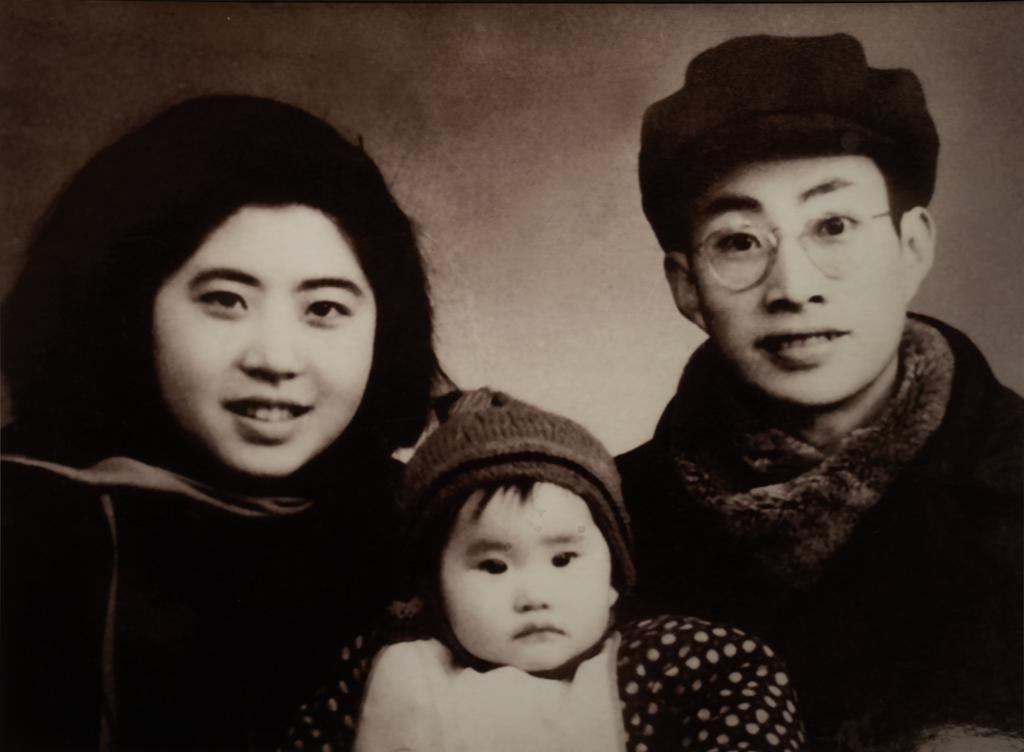
Yet the work still had far to go. Much of what Turdi Ahun sang was in the ancient Chagatai language. Wan's team brought in translators, Uygur poets and musicians to render the lyrics first into modern Uygur and then into Mandarin. By 1956, they had recorded 245 pieces and 2,482 lines of lyrics from the performance of Turdi Ahun, who died that same year.
After further editing and supplementation, the collected scores of the Twelve Muqam and accompanying records were published in 1960, containing 320 musical pieces and 2,990 lines of lyrics. It was the first time the Twelve Muqam had been preserved as sound, text and musical notation.
"Without Wan Tongshu's dedication, perhaps this touching treasure of folk art would be lost to us today, with no one to perform it or pass it on," said Dilxat Parhat, head of the Muqam Art Troupe of the Xinjiang Art Theater.
KEEPING TRADITION ALIVE
Wan stayed in Xinjiang. For the next half-century, he traveled across the region, collecting and studying Muqam melodies preserved by folk artists in different communities.
Some of that work is now housed at the Wan Tongshu Muqam documentation hall at Xinjiang Arts University. The collection includes 48 wire recordings made in the 1950s, along with 635 pages of Wan's handwritten scores and 1,231 pages of notes.
Abdusemi Abdurakhman, a professor at Xinjiang Arts University, called Wan "a founder of the theoretical knowledge system of Muqam art." The university has opened programs in Muqam performance and research, and the old recordings have been digitized for use in teaching.

The effort to protect the art has also moved beyond archives. Over the years, local regulations have been introduced to safeguard Uygur Muqam art. A professional troupe has been established. Inheritors across Xinjiang have received financial support.
For Yusan Mahmut, 58, such support has helped turn inheritance into daily work. He began learning the Turpan Muqam as a child and can now perform more than 200 songs and 34 overtures in that branch of the tradition. He was named a regional-level inheritor in 2008 and a national-level inheritor in 2025.
For more than 30 years, he has performed and taught the Turpan Muqam, while also taking it to other parts of China and abroad.
"Most of the funding for my teaching and performances comes from the government," he said. "Without that support, it would be very difficult to pass on the Muqam, and even fewer people would ever get to know about it."
AN OLD ART, NEWLY HEARD
A later generation is working with a different kind of recorder.
In 2010, Wang Jiangjiang, then 26, came to Xinjiang from Hebei Province to document folk Muqam performers. He brought digital audio and video equipment, and later shared some of the materials online. To better understand the art, he taught himself the Uygur language and studied singing with folk artists.
Over 16 years, Wang has visited more than 300 villages and collected digital records of more than 2,400 folk artists. Some people in Xinjiang call him "the Wan Tongshu of the digital age."
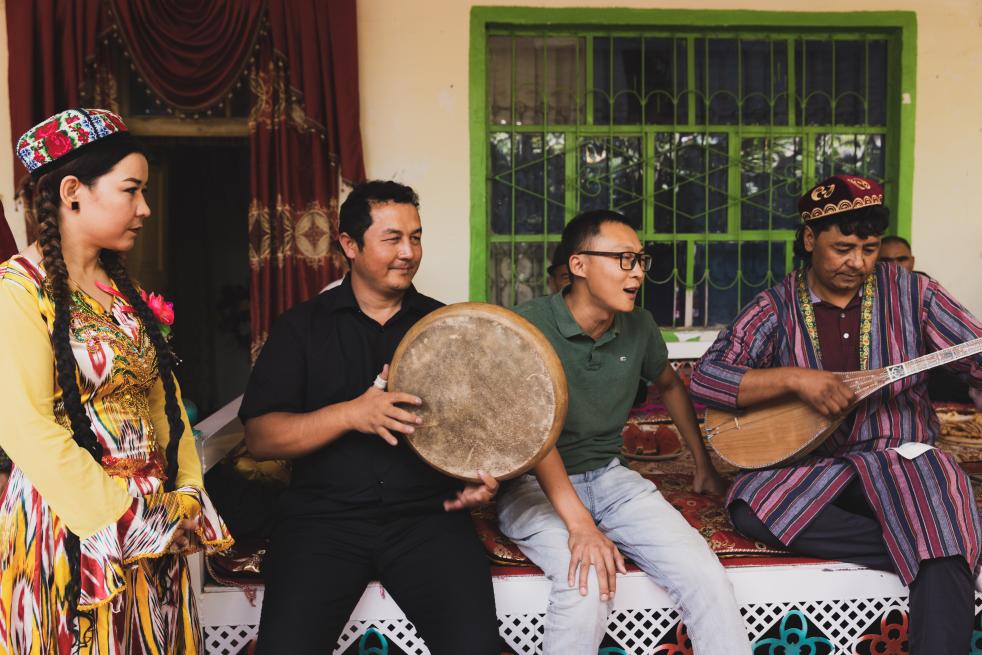
When the film Wan Tongshu debuted in Xinjiang, Wang went to see it. "Wan Tongshu's persistence gave me great encouragement," he said. "We will work to ensure that Muqam art is better protected and developed."
The tradition Wan helped preserve is also being found in new forms onstage. In January 2023, the Muqam Art Troupe staged a work that combined Uygur Muqam with song, dance, poetry, music and multimedia. Co-created with the Shanghai Conservatory of Music, it is now performed more than 15 times a year and has drawn more than 10,000 viewers.
For Nusrat Vajidin, former vice president of the China Musicians Association and a veteran composer who grew up in the same residential compound as Wan, Muqam has become a source for symphonic writing.
"Wan Tongshu's mission was to rescue, document, and pass on the Muqam," he said. "But for creation, he urged us to reinvigorate the art with new forms and techniques. That was his lifelong teaching to me."
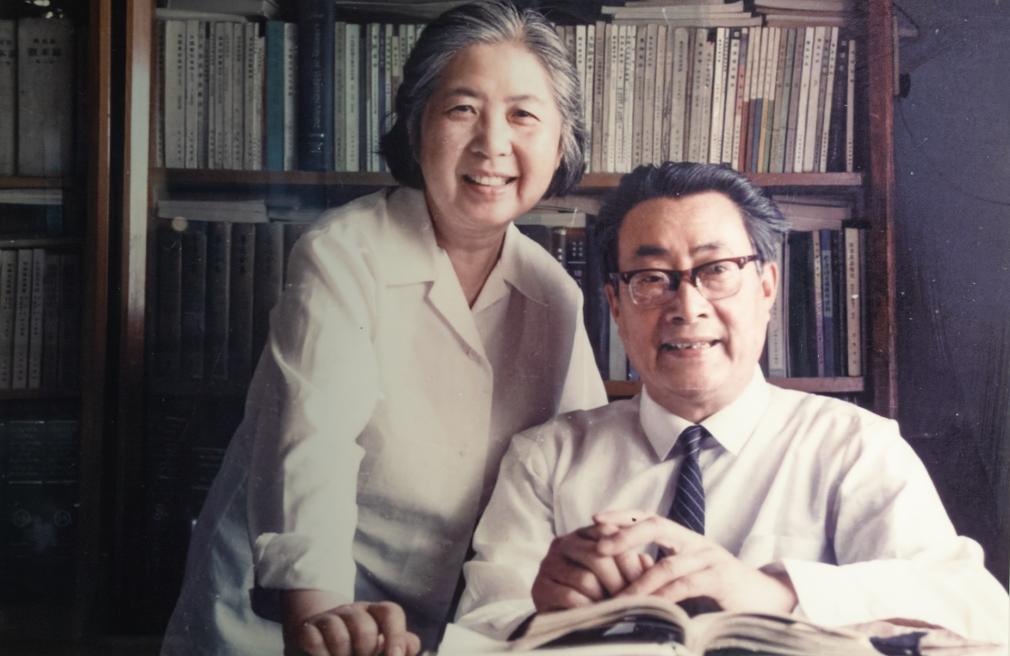
Wan died on Jan. 9, 2023, at the age of 100. Looking back on his life, Lian said her husband had been fortunate.
"He worked hard all his life," she said. "And there was a result. Someone inherited it."
The Twelve Muqam no longer depends on one singer's memory, or on wire reels that might snap in the middle of a phrase. It lives in scores, recordings, classrooms, village archives and new performances -- still old, still changing, and still being listened to.
(Video reporter: Zhou Shengbin; Video editors: Zhang Yichi, Roger Lott, Zheng Qingbin and Hong Ling) ■












Comments